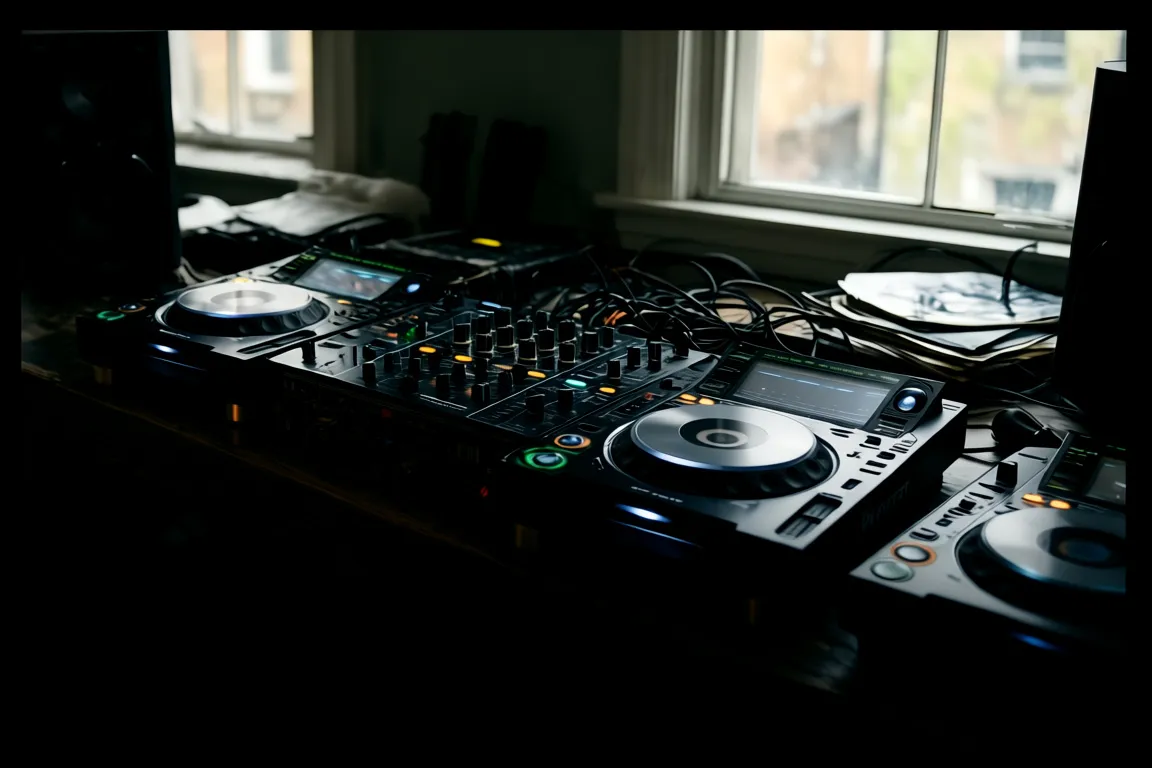
The Art of the DJ Set: Crafting a Groove That Connects
You walk into the room, scan the crowd, and decide what actually moves them instead of what you wish they liked. That choice sets the whole night.
Know the crowd before the first track
Arrive early. Stand at the bar for ten minutes and watch how people move when the current DJ plays. Note ages, how close they stand to each other, and whether anyone is already dancing. Those details tell you more than a request list.
- Younger group at 10 p.m. on a Friday? Start around 120 bpm with clear vocals.
- Mixed ages after midnight? Lean toward 124-126 bpm house with recognizable hooks.
- Mostly dancers who came to move? You can open darker and build from there.
Plan the first four tracks
Pick these before you arrive so you are not guessing under pressure. The goal is to land the room in a steady pocket within fifteen minutes.
- Track 1: familiar enough that heads nod within thirty seconds.
- Track 2: same tempo, slightly deeper so people step closer to the floor.
- Track 3: add a small energy lift, maybe an extra percussion layer.
- Track 4: a record most people know but rarely hear in this setting.
Write the four titles on a sticky note and keep it next to your laptop.
Watch the floor, not the waveforms
Energy drops show up first in body language. If shoulders stop moving and conversations start, you have about ninety seconds to change direction before people walk away.
| Signal | Quick fix |
|---|---|
| People turn toward the bar | Drop a vocal they can sing along to |
| Dancers spread out | Raise tempo by 2-3 bpm |
| Crowd clusters in corners | Play something upbeat and open |
Build transitions that keep the pocket
A good transition does not call attention to itself. Match the outgoing bassline with an incoming one for eight bars, then swap the mids. If the keys clash, pull the highs on the outgoing track early.
Example: outgoing track sits at 124 bpm in A minor. Incoming track is also 124 bpm but in C major. Bring the incoming bass in at bar five, ride the two basses together, then cut the outgoing mids at the phrase change. The floor stays locked the whole time.
Close while they still want more
Stop one or two tracks before the room peaks. Leave the last record playing until the lights come up or the promoter cuts you. People remember the feeling of wanting one more song more than they remember the final banger.